Posts Tagged ‘Cecilia Hue’

Basket Trouble in Mali

by Cecilia Hue, Assistant Producer, Deserts/Grasslands Team 

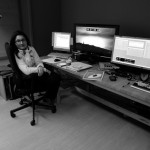
This is my last filming trip for ‘Human Planet’ and I am going back to Mali, which has become my second home since I joined the Bristol team a couple of years ago.  The journey starts with the most extraordinary beginning, the stuff of Hollywood movies.  A volcano which no-one has ever heard of, with an unpronounceable name, erupts in Iceland and spews so much volcanic ash into the air that European air space has ground to a halt – the morning we were supposed to fly to Mali!  What would normally take five and half hours by plane ends up taking over 100 hours!  Our production co-ordinator Isabelle Corr cool as a cucumber, as ever, (see photo below!) cunningly devises a roundabout route via ferry to northern Spain, a drive to Madrid and two flights that finally land us in Bamako, Mali. 

Isabelle in the office

We are determined to make it in time for an event which only takes place once a year: a fishing festival in the desert, possibly the most dramatic sequence in the Deserts programme.  Once in Mali we still have a two-day journey by road before we get to location.  It is incredibly hot, 45 degrees (which for those who have never experienced it feels like having your head stuck in an oven ), we get  punctures, and an incredible sandstorm which leaves the whole team caked in a layer of orange dust.  We look as if we’ve all been ‘Tangoed’!   

Robin, Andrew & Cecilia after the storm

We finally arrive in the Dogon village of Bamba, built among boulders at the foot of an incredible 500 m high escarpment which cuts through the monotony of the Sahel for over a hundred miles.  Everything here is parched as the dry season reaches its peak, leaving only one sacred pond full of catfish (which have retreated to this last haven as all the rivers dried up).  
It’s 7am on Saturday 24th April.  The day of the fishing festival has finally arrived.  The Dogon are very superstitious.  Women are not allowed anywhere near the sacred pond.  As I am the only woman in the team I am gently ushered away from the scene by my fixer.  I am told that I might lose my fertility if I stay.  Frankly, I am not prepared to take any risks so I join the other women in the village.  They are all busily getting ready for the celebration – braiding their hair and pounding millet for the big feast.  
In the meantime, the crew is preparing to film the fishing frenzy which will last no more than 15 minutes and is unrepeatable for religious reasons. There’s no room for error.  4000 bare-chested men -including our character Amadou – have turned up to the pond the size of an Olympic swimming pool, armed with their cone-shaped fishing baskets, ready to charge in.  They hope to catch a fish or two.  If they do, they believe it will bring good rains and a subsequent abundant harvest for their family and their village.   

Antogo


Antogo

Our character is fortunate to have made it to the festival.  The day before, he almost got kidnapped from the film set by a mob of angry men from the neighbouring village.  We had caused deep offence by bringing his fishing basket onto their territory.  We soon discovered that the basket was a painful reminder of the village’s defeat against Bamba in the battle for control over the pond.  We had made a terrible basket faux pas!  We apologized profusely to Amadou’s arch enemies and were asked to give a small payment to repair the harm. 

To see the full story of the fishing festival, look out for the “Human Planet”  Deserts  programme!


Snake Hell

by Cecilia Hue, Assistant Producer, Deserts and Grasslands team

 I have a confession to make. I find snakes repulsive. They freak me out. Let’s put it this way …you wouldn’t get me posing like Cindy Crawford with a snake around my naked body.  Not if you paid me a million dollars!

 So when I was asked to direct a sequence about the biggest snake harvest in the world, the thought filled me with dread.  How would I cope with millions of snakes slithering around me? As I walked out of the plane into the sauna that is Cambodia I told myself I would have to be brave and get on with it. 

11-year old Vanei was completely at home among the snakes

11-year old Vanei was completely at home among the snakes

You see, unlike the children I was about to film with, I didn’t grow up with snakes which may explain why I am not so relaxed around them.  Vanei, aged 11, was so comfortable with snakes that he liked to wrap them around his neck.  His two little sisters aged 6 and 3 were very happy to play with them too and make wriggly bracelets and necklaces of snakes. It would have been my idea of hell!

  Live wriggling necklaces

 Vanei tried to get me used to them but soon realised it was much more fun trying to scare me.  I was the laughing stock of the group. But I didn’t mind… I think it helped them relax around us.

I made the mistake of telling him I was scared of snakes!

I made the mistake of telling him I was scared of snakes

 Later on, our little snake boy sat next to a big pile of live snakes to discover that one of the crawling creatures had made its way up his shorts!  It was my turn to laugh…


Elephants, cattle and 21 languages

by Cecilia Hue, Assistant Producer, Deserts and Grasslands team

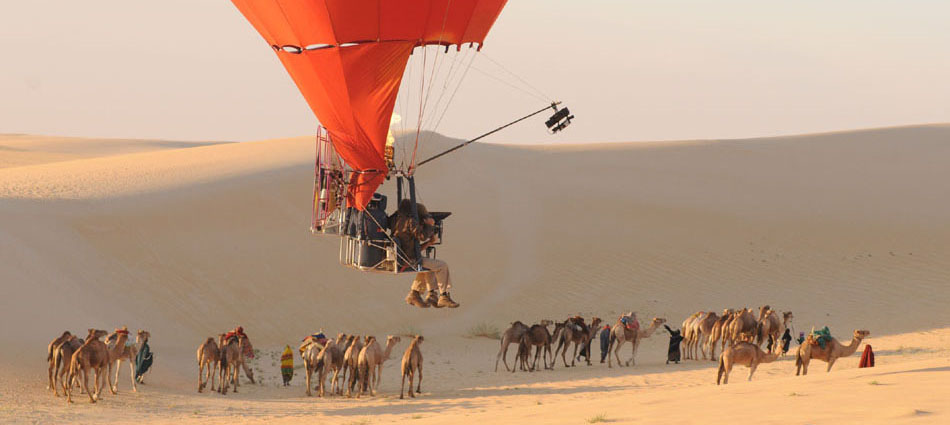
I’ve had to do a few strange things on shoots. But playing hide and seek with a herd of thirsty desert elephants – and discovering the back of a cow was the perfect hiding place – well, that’s a first.

To get close enough to film the desert elephants of Mali, who make up for their poor eye sight with an incredibly developed sense of smell, we have to draw on new reserves of cunning – that means foregoing sun lotion in soaring desert temperatures and ensuring we are downwind so they don’t spot us and decide to charge.  Or, even worse, disappear into the Sahel, a strip of sub-Saharan land that stretches for 2400 miles from Mauritania to Sudan.

The games we have to play are frustrating for the cameraman, Richard Kirby, who has filmed elephants before in Kenya and in India, and has always managed to get right up close. Learning the hard way that these elephants are very wild and camera shy, we’ve ended up having to shoot from a distance of 40 metres.

Discussing the crane shot with Richard

Discussing the crane shot with Richard

After driving for three days  across a barren and unremarkable landscape to the sounds of Salif Keita’s album ‘Folon’, we’re finally in the elephant reserve of Gourma, south of Timbuktu and are rewarded by the amazing spectacle of Lake Banzena.  It’s the main source of water in the region at this time of year, and the place is teeming with wildlife.  I’ve never seen so much life concentrated in one place before – thousands of cattle dotted around the lake, millions of quelea birds performing a beautifully choreographed ballet around us, and several herds of elephants busily slurping water and rolling around in the mud. It’s stunning. I feel very privileged to be here.

Lake Benzena, teeming with wildlife

Luckily, not all the stars of our show are such tricky customers as the elusive elephants.  Mamadou, our character and cattle herder, is a joy to work with, even when I ask him to do the same thing several times in 45 degree heat so we can film the action from different angles and get it right. Yet simply passing on instructions is no easy task. Often on location, I can speak the language spoken in the country but this time it’s different: there are about 20 different ethnic languages in Mali and not everyone speaks French.

Mamadou speaks Fufulde, the language of a nomadic tribe called the Fulani. So every time I speak to him my sentence is translated from French into Tamashek and then from Tamashek into Fulfulde. It’s way too complicated, so I decide to learn a few key words: ‘Alekate’ – ‘please do it again’ – comes in very handy. And all his hard work pays off. He’s really pleased with the shots.

Mamadou is really pleased with the shots

Mamadou, the Fulani cattle herder, is really pleased with the shots

It’s my second time in Mali, but this time I’m here to direct my first sequence for Human Planet. And it’s a tough shoot –  whatever could’ve gone wrong, for some reason, has. Two generators break down and fry our camera chargers so we aren’t able to film anything for a couple of days – we experience the mother of sandstorms and our fixer goes down with a kidney stone and has to be evacuated. And then it starts raining and all the elephants abandon the lake and our filming set!  All this happens in one long day!!

Every day throws a different challenge at us. But I try to keep smiling all along and I have to admit that, if it hadn’t been for the amazing spirit and efforts of the team around me, Richard, Sophie, Abbie, and our fantastic fixers and drivers we wouldn’t have made it!! S o when we finally get the sequence in the can we are all exhausted… but very happy indeed.

The A-team: Sophie Meyer, sound recordist; Richard Kirby, cameraman; and myself - and, not in vision, Abbie Trayler-Smith, the photographer

The A-team: Sophie Meyer, sound recordist; Richard Kirby, cameraman; and myself - and, not in vision, Abbie Trayler-Smith, the photographer


This website is made by BBC Worldwide

More from BBC Worldwide