Posts Tagged ‘Dina Mufti’

Teams everywhere on location

 (C) Ellen Davies / BBC Human Planet

by Ellen Davies, Production Manager, Arctic/Mountains team

My location is Cardiff and my office is on the top floor of BBC Wales which overlooks Llandaff Cathedral.   Here I  enjoy the comforts of my work place where so many of our day to day facilities are taken for granted.   I’m comfortable.  One of my  teams are currently in Greenland, the other is about to head off to Mongolia (for more see below my blog).   Geoff from BBC Shipping has a very soft, gentle voice and says: “Calm.  Calm.”   It works.   I’m now calmer and I’m in the process of freighting my second shipment of kit to Qaanaaq, the most northern town in Greenland.   Geoff simplifies the process.

We hire, purchase, gather and pack our kit with our wonderful Patrick Murray, Cardiff’s Technical Assistant on Human Planet (what would we do without Patrick?).   For Greenland this includes a crane with hothead, a kayak with specially designed rig, camping gear, cameras, sound, first aid kit and enough warm clothes and sleeping bags to make sure the crew don’t freeze.

(C) Ellen Davies / BBC Human Planet

Ellen and Patrick and kit bound for the Arctic

Getting the kit to our destination is quite straightforward – from Heathrow to Copenhagen to Kangerlussuaq to Illulissat to Pituffik to Qaanaaq and onto Siorapualuk.   Easy.   (I can even pronounce these names now!)   The kit gets there.   It takes two days.   The last ride is by helicopter where you would fly along the rocky coast line over icebergs and fiords.   It must be pretty spectacular.   The third shipment of kit travels with the crew and I’ve only booked a seven seater people carrier to transport three people and kit!   Where and how do we accumulate so much?  We’ve now exceeded over 1000 kgs of kit.  The Arctic crew are out of the door and I’m already on the next shoot for the Mountains programme….

My Greenland team are filming two stories for the Arctic episode and one involves filming on sea ice that is starting the break up.   Because of the dangers of trying to film the narwhals (sea unicorns) from the kayak and on the ice edge, we have a strict protocol – Bethan Evans (researcher) or Nicolas Brown  (producer/director) must call me at 16.00 hrs daily.   If I don’t hear from them after four hours, I then make contact to their local police.   I look forward to my cup of tea after I’ve received their phone call.   I can relax for another day.   My schedule and two mobile phones rest on my bed side table and I warn my husband that I might just get a call.   I put my phones on silent but vibrate.

Sometimes I wish I was the one going on  these amazing filming trips but generally  I enjoy being on the end of a satellite phone, the welcome voice of home for the guys on location.  By working on this series I’ve really come to understand the incredible way people live in these remote environments.   More than ever I appreciate the comforts of my home, my family and friends and the BBC office.   Roll on 2011, when I will enjoy watching the fantastic footage and amazing stories on my 52” plasma screen in HD!

dale on volcano lowres

Dale Templar, Series Producer, A Return to the Last Disco in Mongolia

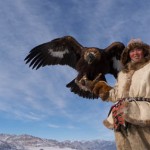
I don’t get out much these days, one of the few down sides of running Human Planet.   On Sunday I am due to return to Mongolia to film golden eagle  nests. I say “due” because I’ve just had a phone call from Dina, our researcher,  to say the eagle chicks we wanted to film have been taken!   Poor Dina!  As I write, there are men on horses galloping around the western Mongolia mountains looking for eagle nests.  They are seven hours ahead and if there is no joy soon we may have to cancel the shoot. 

Anyway, back to my original story.   If we do fly on Sunday this will be a strange return.   The last time I filmed in Mongolia was in 1993, soon after Russia pulled out of the country.   It ‘s still one of the most God forsaken places I have ever visited.   The economic rug had been pulled from underneath the country – they’d been left abandoned.   Ulaanbaator was a sad, bleak capital city filled with stark Stalinist buildings, empty shops, abandoned hospitals and truly disgusting food.   No longer needed as a buffer zone with China, they’d been left to start again.

I had gone to make a film with Fergal Keane about the sewer children and spent a fair bit of time underneath the rat ridden streets of the capital.  We had knives pulled on us, stones thrown at us,  sewer covers slammed on us……. umm Mongolia, can’t wait to return.   Thank goodness for the disco at the Ulaanbaatar Hotel ! 

Seventeen years on,  I’m told Mongolia has changed significantly.   I actually can’t wait to see it.  The boy I filmed was called Batzayan, he will now be a man.   Hopefully he will be successfully forging his way,  feeding his children and keeping them warm as this now established democracy pushes open the doors of the market economy.


Himalayan Odyssey – Episode 2

by Dina Mufti, Researcher, Arctic/Mountains team

Getting home …

Three days before leaving Dolpo in the high Himalayas of Nepal, I twist my ankle, twice. We are two days trek from our pick up point and nowhere near a doctor. We hire a decrepit horse for me to ride. But I am no rider. I think about the 5000m pass ahead and saddle sores, then focus on a hot shower and warm bed, and get on the horse.

(C) Dina Mufti / BBC Human Planet

White horse to the rescue

The crew are ahead and I’m alone with the landscape. Lush river valleys, soaring peaks and a frozen river fill me with awe. I spot lammergeyers, Blue sheep, and Buddhist relics as I plod along. At the 5000m pass I am surrounded by glorious peaks, including Dhauligiri – one of the most famous peaks in the world.

(C) Dina Mufti / BBC Human Planet

Then it’s all downhill. It’s too steep for the horse, so I use two sticks to walk – twisting my ankle a third time might break it. The horse and I are re-united in a wide river valley, lined with medieval mud houses where the smoke from fires inside remind me of home. The journey has taken seven hours. Children greet us – “Namaste sister”, dancing around the horse as we head to camp.

Tenzing Sherpa (back left) and the crew

Tenzing Sherpa (back left) and the crew

The next morning we pack our gear and look to the skies… 7am … 7.30 ….8.15, nothing. We were expecting a Russian MI17 helicopter at 7.30, and it’s late. Later in the morning it can get too windy to land, but It’s the only way we can get out in time for the flights home. We want to take the sherpas with us, otherwise it’s a six day trek to their families. Suddenly a great shudder, and a beast of a helicopter comes hurtling down the valley. Tears and cheers of relief.

The helicopter lurches to the ground like a weary mammal. The clearly miserable pilot takes us in with a cursory glance before signalling ‘6 only’ – but there are 11 of us who need a ride.

Our fixer, Tenzing Sherpa, goes into negotiation overdrive but as soon as we load the kit it comes hurtling back out of the door, thrown out by the pilot’s sidekick. Challenging Tenzing is a dangerous thing. He is a formidable logistics man and no surly airman is going to man-handle him.

In the helicopter, sitting on the kit

In the helicopter, sitting on the kit

With a lot of shouting seven of us manage to get on, sad to leave our sherpas to their trek. Boarding is frenetic and we barely say goodbye to these friends who have guided and saved our lives on more than one occasion. Our kit is thrown unceremoniously in the middle of the helicopter and I have to sit on top of it. Then a huge judder and we take off, waving goodbye through the murky windows as we rattle into the sky and are gone ….

Dale Templar, Series Producer, Human Planet

dale_templar_1lowres


Error alert!

Documentary location cameras are without doubt fickle and temperamental beasts. Our camera beast of choice on Human Planet is the Panasonic Varicam, which films the stunning slo-mo footage we love to see in landmark documentaries. These are not cheap cameras, yet no matter what checks, tests and double checks they go through; no matter how much loving care we give them during their breaks from filming; no matter how much metaphorical cotton wool we pad and pack them in during transportation, recently they seem to have a knack of breaking down at the worst possible moments. The fact of the matter is, we can take dozens of silver boxes full of filming kit on location but if the camera doesn’t work, that’s it, literally end of story.

At the moment we have clearly upset the camera gods. This week our cameraman in Kenya, Warren Samuels, could not believe his luck. Day 1 on location and the lions he wants to film are, for once, in the right place, at the right time, doing the right thing. He rushes to unpack the camera, switches it on and in the viewfinder he gets ERROR flashing in red. It’s the moment of pure HORROR all TV camera operators face at some time or other. It will take us four days to get a new camera to him. Let’s hope the lions are understanding and realise that today’s performance was just a rehearsal.


A Himalayan Odyssey


dina-nepal-dina-in-mtns


by Dina Mufti, Researcher, Arctic/Mountains team

Part I.   Getting In …

I know the Himalayas and thought I knew what to expect, but working on Human Planet has taken me on a whole new journey.  

dina-nepal-donkeysriver

Our destination – Dolpo, a Buddhist enclave near the Tibetan border.    A place so high that trees can’t grow, and electricity is a dream.  The adventure begins right away.   On the flight from steamy lowland Nepal, we rise through precipitous peaks in our Twin Otter plane, almost touching the mountains.   Our organisational maestro is Tenzing Sherpa (no relation to the other Sherpa Tenzing, it’s like being called John Smith in Nepal) –  a fixer so accomplished he could lead an army.  In the remote Himalayas, nothing less will do.

On the flight Tenzing explains that flying at dawn avoids the winds that could blow us into a mountainside later in the day.   Suddenly, waking up at 4am doesn’t seem so bad.   Everyone is blown away by the jaw dropping views.  Then a tiny runway appears through the parting peaks.  We descend quickly and land, bouncing hard in our seats.  As we get out, Nick our director says “Anyone seen the runway?”   It’s 50m long – possibly the shortest runway in the world, with a hump in the middle and either end dropping into an abyss.

We're at one end of the airport, the other is at the edge of abyss behind us (I'm the one in the middle)

We're at one end of the runway, the other is at the edge of the abyss behind us

 Now we have to trek  to our final location and it’s an epic mission.   We are joined by an army of porters,  mules and yaks all needed to help us carry the 500kg of equipment.   As we climb in altitude, the trail becomes steeper, loose underfoot – and one day disappears altogether….

We are climbing towards a 5000m pass, clambering up huge boulders.   At times I lean so far into the rock that my knees scrape.  The path is blocked by fallen trees angling steeply over a muddy slope and a raging river below.  I am grasping and straddling a trunk when Tenzing shouts ‘ DON’T MOVE’ and 20 mules, carrying the gear, tear back round the corner towards us.

Negotiating the trail

Negotiating the trail

Something has spooked them ahead.   A loaded mule starts clambering over me but Tenzing screams and it backs off.  The rest slip down the muddy slope towards the river, scrambling to keep their footing.  I hear Nick  swear as he watches helplessly as our gear heads towards the torrent.  Then I start to slip too.  It seems a long time until I feel Tenzing’s steady hand grip mine and he shouts “OK”.

Somehow these tough mules manage to navigate the mud and get back up the slope.  We all marvel at them and everyone laughs at me clinging to the tree trunk like a slapstick comedy character.  Tenzing  finds another path and we go on, wondering what spooked them so badly.

Tenzing Sherpa pointing out some loose rocks

Tenzing Sherpa pointing out some loose rocks

Ahead we find a landslide that has wiped out the path and the Sherpas making a human chain to get everyone across.  This is serious stuff.  One slip here and it’s just the river below, no muddy slope to find your footing – just loose rocks and a ledge as wide as my foot.  “Ok sister you can do it” … I take a deep breath and put one foot forward ….

Check the blog next week for Part 2, Getting Out..


This website is made by BBC Worldwide

More from BBC Worldwide