Posts Tagged ‘Jasper Montana’

THE BBC COMES TO THE ‘OUTBACK’

by Phil O’Brien, Fixer

Phil O'Brien

My name is Phil O’Brien and I live in a place called the Northern Territory of Australia.  It’s a place you can wind your clock back a few years, have a beer, and live in peace.  Spectacular, panoramic and wild, it’s a huge area, and there’s way more cattle live there than people.  

I suppose I’ve lived a bit of a gypsy life drifting from job to job, and had my share of adventure and also a little misadventure in this great place. Everything from catching crocodiles to trying my hand at being a drink waiter… and everything in-between.  But not so long ago, I got roped into one of the most exciting rewarding experiences of my life, and I’ll never forget the day the BBC film crew came to the ‘Outback’.

The phone rang with a sharp electrified burst, directly over my left ear, was way too early for a bloke that had been drinking beer after beer, some short hours before.  Somehow I got the phone to my ear and answered.

The BB who? BB what…eh, excuse me?  

Jane Atkins

Well, the sweet melodic voice of charming BBC Researcher Jane Atkins never missed a beat.  ‘We need a ‘Fixer’ she politely announced.  Now me being still half cut and not understanding film terminology, did what any respectable citizen of the Northern Territory would have done…hung up and went back to sleep.  

During the next few days Jane Atkins followed up with more calls and information, dedicated and relentless in her pursuit of organising the film shoot, which had to be in the heart of Northern Territory cattle country.   I tried to explain that Territory cattle country can be hard, merciless and unforgiving …and that was on a good day!   But Jane Atkins stuck to her guns, and wanted me to help organise something that was going to be bigger than Ben Hur.   What an honour!  This wasn’t going to be no ordinary Mickey Mouse documentary, the BBC wanted to get right down in the bulldust and cow dung and film a rip roaring helicopter cattle muster in one of the world’s last frontiers.  

It was a big ask, but Jane Atkins had come to the right man.                                     

I knew just about every bloke, every horse, and every anthill in the Northern Territory.  I knew that when it comes to cattle, one man had risen to the top and in a tough environment that breeds tough men, that’s no mean feat.                                   

Big bustling ‘Ben Tapp’ was no ordinary legend.         

Iron Man of the outback Ben Tapp

Built like a brick toilet block, Ben Tapp liked to sprinkle horse shoe nails on his muesli…. he knew no fear.  Ben Tapp was one hundred percent pure Territory cattleman, and when I told Jane he also flies a helicopter like a man possessed, the stage was set.  Ben Tapp took no convincing, he always knew he was a larger than life character and it was only a matter of time before he hit the big screen.

The day finally came and the BBC film crew landed at our humble airport in the Territory capital of Darwin.  What a fantastic bunch of people, I thought to myself as the introductions flowed and the pommy accents filled the air.  They were a star studded line up, the best in their field.  Jane Atkins was even better looking in real life than I imagined and the cameraman was a friendly bloke called Toby Strong.  Accompanying them was the director, charming Susan McMillan, and technical assistant and roustabout, Jasper Montana.  Sound man Ian Grant who flew in from Queensland.  After a flurry of baggage, camera and sound kit, hire cars and groceries, we headed off on our 600 kilometre journey down to Maryfield Cattle Station, home of the legendary Ben Tapp.

Right from the start I really liked their humility; there was no big egos, no pretence, just a great film crew chomping at the bit.  Keen to roll it, wrap it, and get it in the can.              

We broke our journey after about 300 kilometres at Katherine, just in time to witness a fairly lively punch up between a couple of locals at the petrol station.  The BBC film crew weren’t too fussed, they’d been all over the world, and two bantam weights swinging like rusty gates weren’t about to freak them out.  Next stop down the track a bit was the one horse town of Mataranka, population 200 [including cattle].

The BBC was starting to get hungry so I steered them over to the Pub.  Inside there were people propped up drinking furiously.  It was like ‘God’ had personally just rung the pub and told them the world’s ending in half an hour, so get into it.  In amongst it all was the publican, a glamorous lady called Deb, wandering around in a beautiful flowing gown, quite a sight in amongst all the rough necks.  I introduced her to the BBC film crew.  If she’d had a red carpet she would have rolled it out but instead she cooked a great feed of Barramundi and chips for everyone, she was a great host.  

With Barra and chips hanging off our ribs we made the last few hours to Maryfield Station and finally everyone had a chance to meet Ben Tapp.  It was all very warm, and although Ben is tough, hard, wild and all the rest of it, he is also a very generous bloke, and he totally opened up his house and his property to the BBC film crew, and nothing was going to be too much trouble.  Ben’s hospitality really was first class.  He was right on the ball, he had 2000 head of cattle to muster and he had his young team of stockmen fully briefed.  His right hand man on Maryfield was a bloke called Rankin Garland who also was a gifted chopper pilot.  Right from the start everyone really hit it off.

, Phil O’Brien[Fixer], Jane Atkins[Researcher], Ian Grant[Sound], Chris Rose[Jet Ranger Pilot], Susan McMillan[Director]. Front Row (from left) Rankin Garland[Helicopter Pilot], Toby Strong[Cameraman], Ben Tapp[Helicopter Pilot], Jasper Montana[Technical Assistant]“], Phil O’Brien [Fixer], Jane Atkins [Researcher], Ian Grant [sound], Chris Rose [Jet Ranger Pilot], Susan McMillan [Director]. Front row (from left) Rankin Garland [Helicopter Pilot], Toby Strong[Cameraman], Ben Tapp [Helicopter pilot], Jasper Montana [Technical Assistant].”]

Back Row(from left) Warick Field[Cineflex Camera Operater

 The next ten days for me were just unreal, I got to see a world class film crew in action and I was totally inspired.  Camera man Toby Strong went from sun up to sundown and still had energy, I remember one time he was hiding in a bush filming cattle as they filed passed, a snake came out of nowhere and slithered over his leg, but he never flinched, he just kept filming.  There was no stopping him, where ever the action was, there was Toby.  

Susan McMillan was a great director and she brought the best out in everyone, she and Toby made a great creative team.  I felt sorry for her a bit because I was doing the cooking for everyone and so all my meals revolved around meat, meat, and more meat, poor old Susan was vegetarian and I can’t actually remember her eating anything the whole ten days.   She would have paid big money for a lettuce.

Susan, Toby and Ben communicated really well and as the whole focus was on helicopters and mustering, Ben and Rankin didn’t disappoint.  Their aerial work was breathtaking, and Ben really got into the whole film thing.  He was actually coming up with great ideas for shots and where to put the camera and what angle and stuff.  He was proving very artistic, in an outback type of way.  Obviously under that tough, rugged, exterior was a sensitive creative new age guy.

Cattle being herded

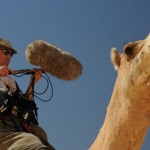
Jane Atkins reminded me of the ‘Holy Spirit’, she was everywhere at once. Unstoppable and three months pregnant, she was the rock of Gibraltar.  Jane has such a calm beautiful nature, whether it be out in the hot sun assembling the camera crane, or curled up in front of the computer like a cat, watching over everyone. Technical Assistant Jasper Montana was running around like an unregistered dog, tirelessly helping where he was needed and never complained. Sound man Ian Grant was the total professional as well and spent many hours following cattle around, taping their every bellow.

The only drama was when a Jet Ranger helicopter fitted with a special Cineflex camera that the BBC had hired looked as though it wasn’t going to make it.  This caused a bit of concern as the special Cineflex camera was crucial to the whole thing.  But Jane, after numerous phone calls and emails, and with a little help from God, made it happen.

After days of filming Ben and Rankin doing their wild manoeuvres in the choppers, and cattle wheeling to and fro through the scrub, it was time for the grand finale. It was time for the big money shot.  Two thousand head of disgruntled beef had to be brought in and yarded up.  It really was a great spectacle and all the many hours of planning really came off.  With the Jet ranger and the Cineflex camera high up in the sky taking in the whole vista, Ben and Rankin set about driving the mob into the yards in their dragonfly-like mustering choppers.  Through a veil of dust the choppers weaved, pitching, diving, steering the frenzied mob in towards the yards. On the ground were horsemen and motor bikes turning back any beast that tried to head back to the scrub.  Toby Strong of course was courageously right in amongst it all getting some of the best shots I’ve ever seen.  Ian Grant, camouflaged in the trees, captured some great sound and everything went off brilliantly.  The BBC had won the day!

With the cattle yarded, big bustling Ben Tapp landed and rolled himself a well deserved smoke, it had been tough, but all in a day’s work when you’re a legend.

Ben Tapp

Next day was the completion of the filming.  After a humongous party that night, it was time to pack up all the kit and head back to Darwin to get the film crew on the plane.  There was many a teary eye and a hazy hangover as we all said our goodbyes.  Friendships were made and it really had been a special time. Whether we ever see each other again who knows?                                           

But one thing I know for sure, the Northern Territory will never forget the day the BBC came to the ‘Outback’.


Life is all about packing cases

by Jasper Montana, Technical Coordinator

Metal pins are slowly spreading across the map of the world in our office – each one representing a trip, a recce, a shoot, and another sequence of Human Planet recorded onto what have now become many kilometres of magnetic video tape.   For each of us on the Human Planet team, each pin represents a different moment of time.  

For those who went on location, it may be a life changing adventure, a harrowing experience, or a drop in the ocean.   For those left in Bristol or Cardiff, it might be a sigh of relief as the crew depart, a moment of pause in a quiet office, or a stressful planning process which lingers long after the crew depart, when phone calls from the Jungle require a mortally wounded shoot to be remotely stitched back together.


So far I've been to Mongolia and Yap and I'm about to go to Australia!

 On many occasions the pin represents for me long days of getting a plethora of filming equipment squeezed into the smallest possible cases for transport to location.   So I was going to write a post about how the human desire to make order out of chaos can be summed up in the line ‘life is all about packing cases’ but I thought I’d just make a time-lapse video instead.

 Enjoy.

 Packing cases for a shoot to Algeria – timelapse video coming soon

 Only a handful of pins are left in the jar – who knows what each has in store.


Mongolian Folk and Muddled Pop

jasper lores_edited-1

By Jasper Montana, Technical Assistant

 On a grassy hillside overlooking the undulating hills of central Mongolia, I grasp a unique insight into someone else’s world.  In the valley below is the melee of a hundred charging horses kicking backlit dust into the still air.  From high above, the action is distant – played out by toy farm animals and miniature horse herders in colourful robes – but the horses’ thundering hooves and the herder’s pounding hearts are loud in my ears.  I am recording sound for a “Human Planet” sequence in the Mongolian steppe and have put radio mics on two of the young riders in the summer horse round-up.  In my left ear is Orlana, a 17 year old boy; full of bravado and a fierce rider;  in my right, Tungaa, a timid 16 year old; keen to give it all she’s got.  Orlana’s voice is clear, bold and commanding. Tungaa’s voice is soft and she sings as she rides – the traditional songs of Mongolian folklore and the occasional muddled verse of an American pop song form the repertoire of my private concert.  I shut my eyes, listen and smile.

Chu! Chu! The horse round-up

Chu! Chu! The horse round-up

As I watch the riders charge around the horses like tunas attacking a bait ball, Orlana’s breathing quickens pace. ‘Chu! Chu!’ he shouts encouragingly. The horse tears forward through the herd. Orlana and Tungaa in many cultures would be considered to be just kids, but here in the grasslands of Mongolia, they are in control and are integral to keeping tradition alive.

Lassooing foal lores

 In the global journey of the “Human Planet” series, the remarkable nature of the human condition will be revealed and as the teams come back from location I am continually fascinated by the amazingly diverse incarnations of the family unit around the world. It is often families that become the subject of our sequences and perhaps this is because, more broadly, it is the family unit that provides the framework for upholding tradition and passing knowledge from the elder to the youngster – the flow of knowledge that facilitates the successful relationship between man and nature in every environment.


Shure and her sisters

Shure and her sisters

 The youngest in our Mongolian family is Shure, who is just four years old. We are filming her as part of our spin-off sister series called “Little Human Planet” aimed at pre-school children. As we watch her go about her life, she watches her older siblings and mother intently. Within a few years she will have her own horse and will charge out across the plains with a commanding ‘chu, chu!’ and from her lips will come the recognisable Mongolian folk songs of the past and the muddled pop songs of the future.


It’s the world calling!

 by Jasper Montana, Technical Assistant

Jasper Montana, Technician

I am the technical assistant on Human Planet , which means that I am responsible for getting tons of filming kit out of the door and safely on location. Since I joined the series, it’s become normal for the Ethiopia team to telephone when I’m jumping on the train on a Friday night, Greenland to text me on a Saturday afternoon, or Mongolia to ring five times before 7am on a Sunday morning.  In fact, on weekends my mobile phone becomes a hot spot of international activity!  So it was no surprise when yet another international number popped up on my mobile screen at 3pm on a Saturday afternoon while I was on a trip to the Welsh countryside.

The phone line wasn’t very good – it had that one-second delay that makes you feel like you are being constantly interrupted by someone with the same voice as you – it was the Jungles team in the Central African Republic.  Their main camera had given in to the humidity of the jungle by developing an electrical fault and needed replacing.   I could see that my relaxing weekend in Wales was coming to an abrupt halt. Boy! Was I was right!

Two hours later I was back in our Bristol office.  Jo Manley, the production coordinator – talking away on two phone lines to two different continents as I entered the room – was already on the case.  Unfortunately, weekends are not the best time to arrange anything, let alone the complicated transport of expensive filming equipment from Bristol to the Bayaka tribe in the heart of Africa, but Jo had done an amazing job and had a replacement camera all ready to go.  ‘Jasper’, Jo said to me across the desk as I sat down, ‘How would you like to go to Cameroon tonight?’  With little time to consider, I said ‘Sure, no problem’ and within six hours I was heading down the M4 to Heathrow Terminal 2.

Heathrow Airport. 4am

Heathrow Airport. 4am

Once in Cameroon’s capital, Douala, I was to be met at the door of the plane by two of our local fixers, who would collect the camera from me and continue the two-day drive overland with the camera to our crew in the Central African jungle.  Having been relieved of the equipment, I would return on the next plane back to the UK.  Stepping out of the plane and into the thick humid air of the Cameroon capital, I looked around.   There was no sign of our fixers. 

Before I knew it I was being ushered through Immigration and Customs. I was without a visa, had £30,000 worth of equipment, claimed to be meeting two men who were notably absent and with a return flight to the UK that departed in just three hours time, so I didn’t blame them for being a little cautious.  I was taken into the office of the Chief of Police and tried to explain myself in the most persuasive French I could muster.

After 30 slow minutes of interrogation, both our fixers arrived and took over the negotiations.  I was banished into the waiting room and as I sat nervously outside the office of the Chief of Police, looking at the shirtless men hanging out of cages just two metres away and the female official with an immigration records book of formidable proportions, I thought back to what I had originally planned for that Sunday afternoon: a jog around the park and a film with a friend.

 The office door in front of me opened and the smile on our fixers’ faces told me I was free! Got back on my plane and next thing you know I’m back in the office – it’s Monday morning (I think)  - the start of another normal week on Human Planet.

Doula Airport. Cameroon

Doula Airport, Safe and sound

Dale Templar – Series Producer …. And Finally

People often think that  television programmes are all about cameras and filming .  That certainly is Jasper’s world right now.   Music is also very important to a landmark series like Human Planet.   We’ve been working hard to  bring a very special composer on to the series and I hope to formally announce who this is in a few weeks.   The composer will be working closely with the Radio 3 World Music department.   They have an incredible archive of recordings of musicians and vocalists from tribes and ethnic groups from all around the world.   They have offered us access to this musical treasure trove which we will be able to use when creating the Human Planet sound track.

Dale


This website is made by BBC Worldwide

More from BBC Worldwide